
Quick answer
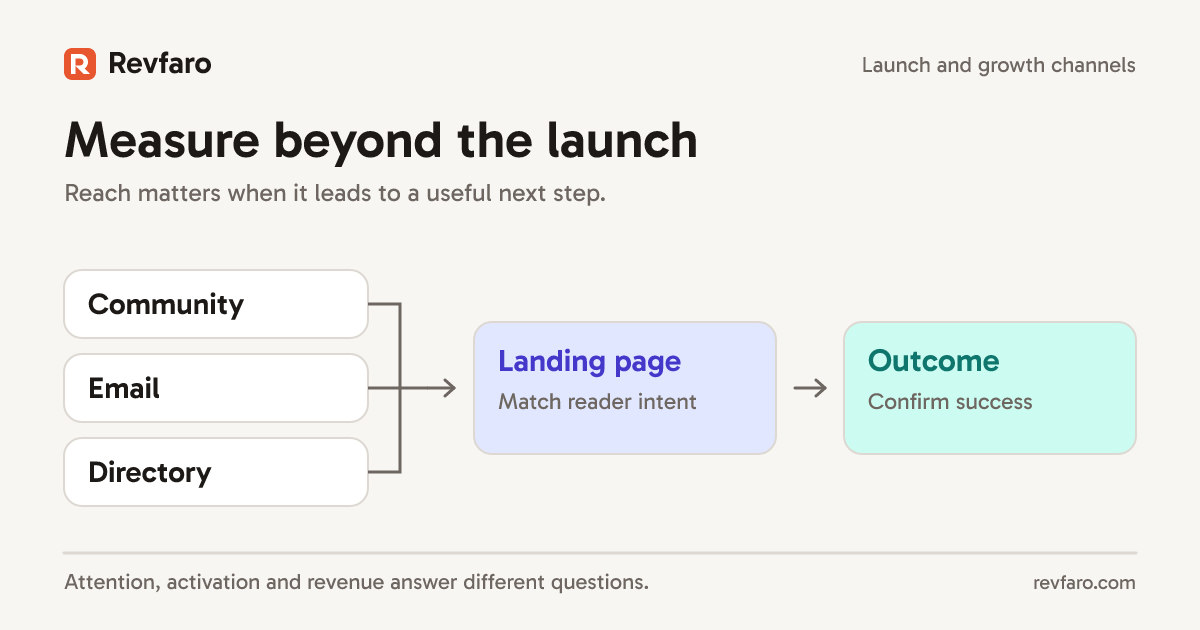
Partnership analytics evaluates whether a joint campaign brings relevant customers and useful product adoption. Shared impressions are less important than qualified participation, value completion, and durable commercial outcomes.
Key takeaways
- Define a shared outcome and reporting window before launch.
- Keep registrations, attendance and activation denominators separate.
- Deduplicate joint results and respect the agreed data-sharing scope.
Set campaign ownership and goals
For a webinar, define registrations, actual attendees, follow-up content visits, trials, and qualified opportunities. For an integration partner, define documentation entries, connected accounts, and successful use of the integration.
Agree on approved tracking, consent, and data-sharing arrangements before exchanging lead information.
Create a shared naming convention
Use consistent campaign labels and partner identifiers for controlled links. Avoid relying on informal spreadsheet names that differ between organizations. Make sure email or event platforms preserve tagged destinations through redirects.
Keep the customer's relationship and privacy boundaries clear; a lead shared with a partner is not automatically permission for unlimited reuse.
Analyze contribution honestly
Suppose Partner A supplies 200 webinar registrations and twenty activated trials while Partner B supplies fifty registrations and fifteen activations. B may have higher activation efficiency, but costs, customer fit, and follow-up timing matter.
Do not double-count customers when both companies report the same purchase as their own sourced acquisition.
Build a learning review
Track setup difficulty, support questions, qualified outcomes, and joint content quality. Use the findings to update integration guides or target a narrower audience rather than simply increasing co-marketing volume.
Agree on one campaign record before launch
Write a shared campaign brief containing the public campaign label, destination, event definitions, reporting window and named reviewer at each company. Decide whether the joint outcome is an attended session, a completed integration or a paying customer. Do not let each partner silently substitute its largest available count.
For an illustrative webinar, registrations, attendance and activation need separate denominators. Twenty activated trials from two hundred registrations is a different measure from twenty activations among fifty attendees. State which population had an opportunity to complete the next action.
Use Revfaro's link builder for controlled arrivals and goals for deliberately defined onsite outcomes. The product does not automatically import webinar attendance or authorize sharing personal lead data. Keep any permitted data exchange in the agreed process, and reconcile duplicate customer records before combining results. End the review with one improvement to the joint experience, not merely a larger combined impressions number.
Related reading
- Affiliate Marketing Analytics for SaaS: Beyond Referral Clicks
- SaaS Waitlist Conversion Analytics: From Signup to Activation
- Product Hunt Launch Analytics: Measure More Than Upvotes
Frequently asked questions
Should both partners claim full attribution credit?
They may report influence, but financial allocation and partner payouts need explicit rules to avoid double counting.
Is webinar attendance a revenue conversion?
No. It is an intermediate signal that may precede a qualified opportunity or purchase.