
Quick answer
A Product Hunt launch should be evaluated by relevant visitors, activated trials, customer conversations, and paid outcomes—not only upvotes or rank. The on-platform signal and your own product funnel tell different stories.
Key takeaways
- Keep votes, visits and customer outcomes separate.
- Validate success and failure paths before the launch.
- Review delayed purchases after an appropriate observation window.
Prepare before launch day
Create a clear landing-page proposition and one consistent campaign taxonomy. Confirm pageview, signup, activation, and checkout events using synthetic tests in an isolated test setup. If platform rules or link behavior restrict parameters, follow them and document attribution limits.
Make the signup and setup journey reliable before seeking a large burst of attention.
Watch the launch in real time
Review traffic by landing page, device, geography, and meaningful event progress. Separate genuine human visits from suspicious automated requests and monitor infrastructure error rates.
Use customer questions and objections to improve documentation. Do not optimize solely for a large live visitor counter.
Calculate the outcome after the burst
Suppose a launch brings 3,000 sessions, 150 trials, and 30 activated accounts. Session-to-trial rate is 5%; activation among trials is 20%. A purchase may occur weeks later, so review mature cohorts before concluding the commercial result.
Compare launch visitors with later organic or direct return visits under a documented attribution policy.
Turn the launch into durable growth
Publish useful lessons, improve the strongest onboarding friction, and update relevant help pages. Record the launch date on your analytics timeline so future traffic comparisons account for it.
Prepare a launch evidence packet
Before launch, write down the approved destination, campaign label, signup success condition and activation milestone. Check the full journey on an isolated test website, including a failed signup. The failure should not emit a success goal.
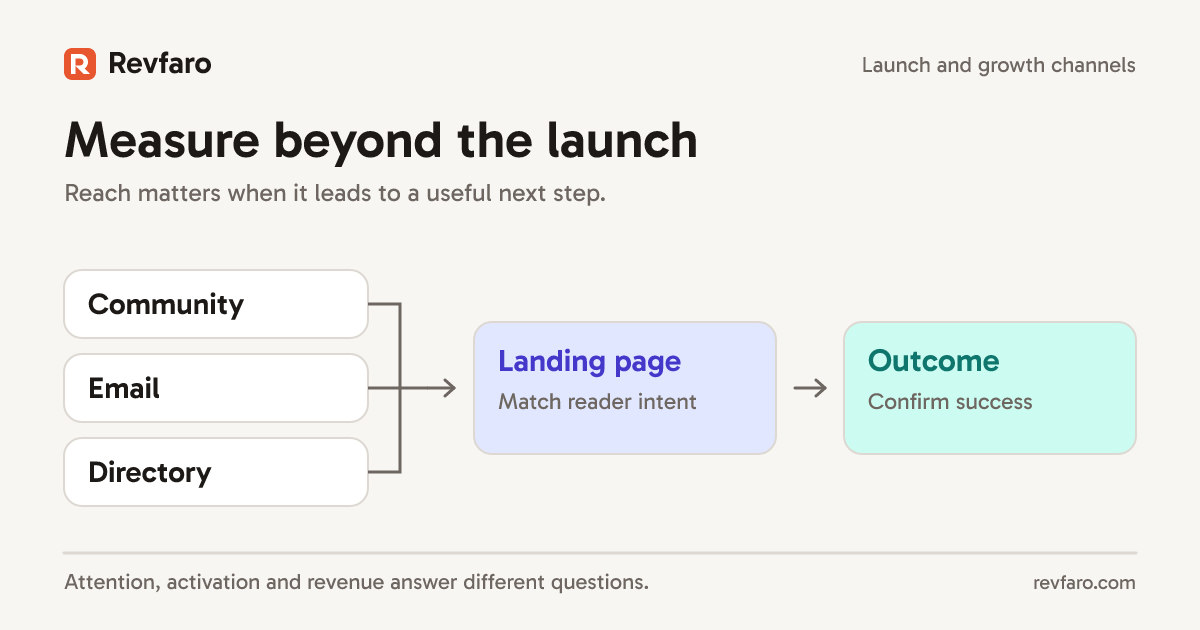
During the launch, keep three separate records: the platform's own engagement metrics, the website's observed visits and the product's confirmed customer outcomes. A vote belongs to the first record. A tagged visit belongs to the second. A successful payment belongs to the third. They should not share one denominator by accident.
Use Revfaro's link builder, live view and goals for the supported observations. Add the launch time as context, then set a later review date for delayed purchases. The numerical example in this article is illustrative; it is not a Product Hunt benchmark or a promised conversion rate. Keep the actual counts and unresolved attribution gaps alongside the final review.
Related reading
- YouTube Tutorial Attribution for SaaS: From View to Product Use
- Hacker News Launch Traffic: Analyze Technical Audience Quality
Frequently asked questions
Do upvotes equal website visitors?
No. They are different on-platform and onsite actions.
Should I judge success only on launch day?
No. Track activation, customer feedback, delayed paid conversion, and retention.