
Quick answer
Referral spam is traffic or event data crafted to place misleading referring domains in reports. The goal of cleanup is reliable analysis, not blindly hiding every unfamiliar website.
Key takeaways
- Investigate multiple signals before labeling unfamiliar traffic spam.
- Know exactly what an exclusion matches and which valid visits it may remove.
- Collection exclusions affect future events and do not rewrite historical reports.
Recognize suspicious behavior
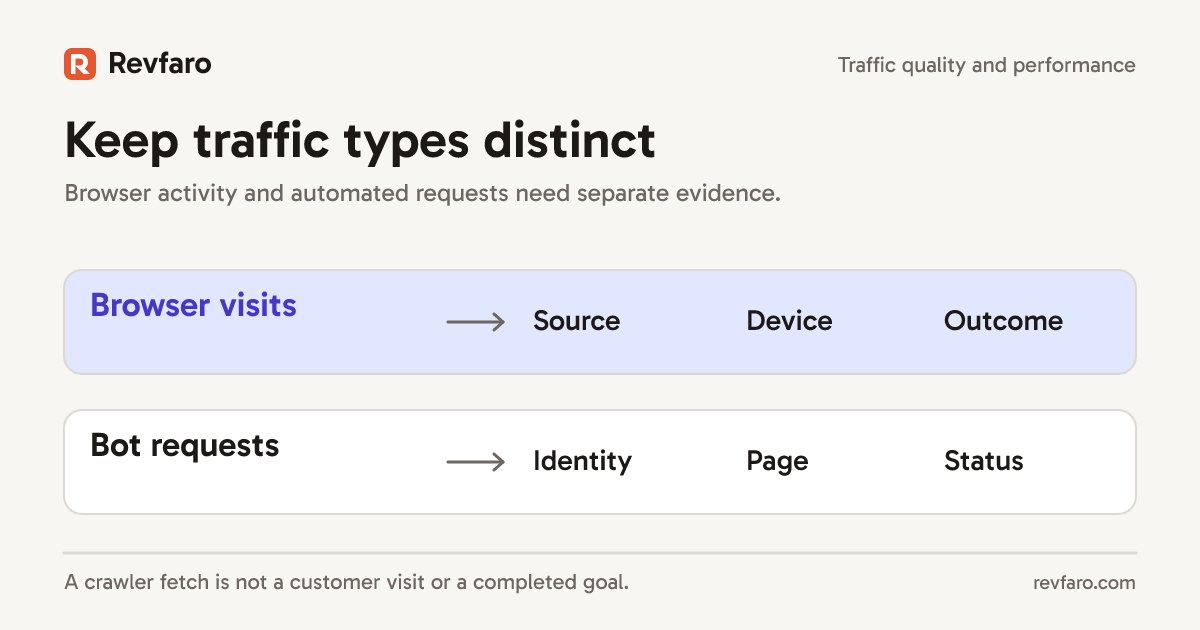
Look for sudden irrelevant referrers, implausible traffic frequency, fake page paths, high volumes with no meaningful actions, and sources that appear only in one short window. Compare with server requests and bot signals when available.
Avoid assuming a low conversion rate proves spam; legitimate educational referrals can also have limited immediate sales.
Verify the origin
Inspect the real landing paths, timestamps, user agent patterns, and whether requests passed normal collection validation. Some malicious actors send fake events directly to ingestion endpoints without actually visiting a website.
Check domain authorization, rate limits, and event acceptance rules. A supplied URL or origin header is not sufficient authentication by itself.
Exclude carefully and transparently
Maintain explicit filters with dates, reasons, and reversal options. Do not destroy raw evidence needed for investigation or rewrite every historical metric silently. Where possible, segment likely spam from legitimate traffic.
Document how filtered counts differ from total accepted events.
Protect business decisions
Compare qualified signups and revenue rather than referral volume. A dashboard that ranks spam domains as “top marketing partners” can lead a founder to waste time on irrelevant outreach.
Keep an exclusion decision record
Suppose an unfamiliar referrer appears alongside repeated requests to a nonexistent landing path. Record the observation window, accepted-event count, affected path and other corroborating signals before changing collection rules. An unfamiliar domain alone is insufficient evidence, and opening a suspicious referral link is not necessary to investigate the pattern.
For each proposed exclusion, write what it will match, which legitimate traffic it could remove and how to reverse the setting. Revfaro's exclusions cover IP ranges, countries, website hostnames and page paths; this is not a dedicated referrer-domain blacklist. Exclusions drop future matching events before storage and quota counting. They do not erase historical traffic or make dropped events recoverable later.
Use the narrowest supported rule justified by the evidence, then document its activation time with a chart note. Compare future traffic quality against recorded goals rather than declaring the investigation successful simply because the unwanted row became smaller.
Related reading
- AI Crawler Analytics: Track Bots Without Confusing Them with AI Referrals
- Missing Analytics Events: A Step-by-Step Debugging Checklist
- Core Web Vitals for SaaS: Connect LCP, INP, and CLS to Outcomes
Frequently asked questions
Should I block every unknown referrer?
No. Verify patterns first; new legitimate partners often appear as unfamiliar domains.
Can referral spam include fake pageviews?
Yes, especially if an ingestion endpoint accepts arbitrary unauthenticated payloads.