
Quick answer
A SaaS analytics implementation should begin with clear metric definitions, then add website tracking, product success events, campaign attribution, verified billing, and ongoing data-quality checks. The order prevents an attractive dashboard from being built on unreliable data.
Key takeaways
- Attach a verifiable result to each implementation step.
- Test failures and duplicate deliveries in isolation.
- Recheck the affected path after integration changes.
Define measurement before code
Write primary conversion, activation milestone, customer identity unit, reporting timezone, and source attribution rules. Distinguish paid customers from accounts, sessions from visitors, and cash collection from MRR.
Create a short event dictionary with triggers and allowed properties.
Install and validate capture
Add a lightweight tracker through the supported setup method. Test initial pageview, SPA navigation, UTM capture, referrer, and custom goals. Verify consent behavior and ensure sensitive input or private URLs are not collected.
Check that a test event is accepted, stored, and visible in the intended report.
Connect backend outcomes
Emit successful signup and activation events from trusted states where possible. Integrate payment-provider notifications for financial reporting, verify signatures, deduplicate retries, and reconcile amounts and refunds. Do not substitute a checkout success screen for a confirmed provider payment; settlement and bank payouts are separate financial events.
Keep tenant scope and API keys secure.
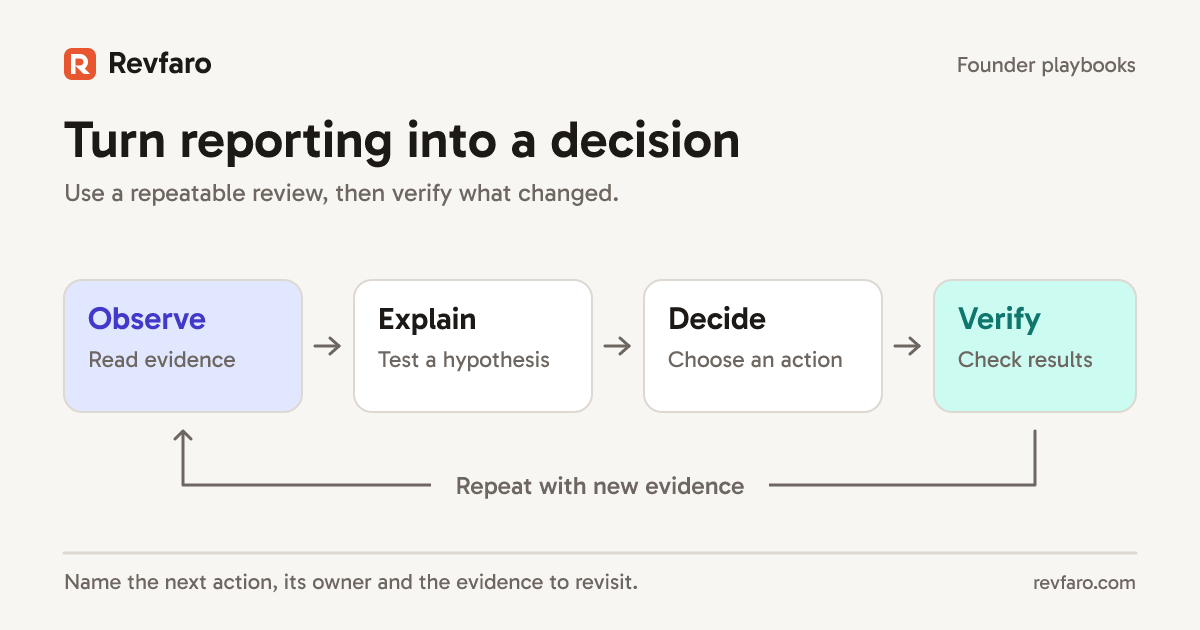
Establish a repeatable review
Test one synthetic journey after releases, monitor event delivery and report latency, and reconcile monthly revenue with the provider. Review source tagging and major metric definition changes with teammates.
Turn the checklist into evidence, not a sign-off label
Give each installation step an expected result and a retained observation. For the tracker, record the accepted request and the corresponding report after processing. For a goal, record a successful action and a failed attempt that does not emit success. For payments, use an isolated provider fixture and confirm that a repeated delivery does not create a second sale.
Keep the website identifier, integration version, reporting timezone and test time with the evidence. Do not include secret keys or real customer payloads in a public issue. If one check cannot run in the chosen environment, mark it untested and assign an owner.
Revfaro's verification guide, goals documentation and revenue rules provide the product-specific contracts. Re-run the affected checks after changes to routing, authentication or checkout. A complete checklist is useful only when its results still describe the integration being released.
Related reading
- Google Analytics Alternatives for Indie SaaS Founders: A Framework
- Ten SaaS Analytics Mistakes That Lead Founders to Wrong Decisions
- The Weekly SaaS Founder KPI Report: One Page, Better Decisions
Frequently asked questions
Should I install the tracker before deciding what to measure?
You can test it, but production reporting needs documented business events and metric definitions.
What is the most important final QA step?
Verify the full source-to-activation-to-payment path using trusted records and a known test case.