
Quick answer
Direct traffic typically means a visit without usable campaign or referrer information. It can include typed URLs and bookmarks, but also links shared in private apps, tracking-stripped redirects, and other unknown-origin visits.
Key takeaways
- Direct traffic is a missing-source category as well as typed or bookmarked visits.
- Reproduce controlled links before changing attribution assumptions.
- Record contextual hypotheses without rewriting historical evidence.
Explain the unknown-source bucket
When analytics cannot reliably determine an origin, it must classify the session somewhere. Direct is often that fallback. A founder may interpret rising direct sessions as stronger brand awareness even when the increase came from untagged email or social messages.
Definitions differ among products; check whether a platform uses last non-direct attribution or preserves an earlier campaign for returning users. “Direct session” and “direct-attributed purchase” need not mean the same thing.
Investigate a suspicious increase
Compare landing pages first. A sudden flood into an obscure deep URL is less consistent with people typing the address manually. Review recent newsletters, product announcements, redirects, URL shorteners, QR codes, and chat campaigns. Check whether UTM parameters are dropped during redirects.
Segment by device, geography, and time. Exclude obvious bots and your own test traffic before developing a marketing narrative.
Use a practical tagging policy
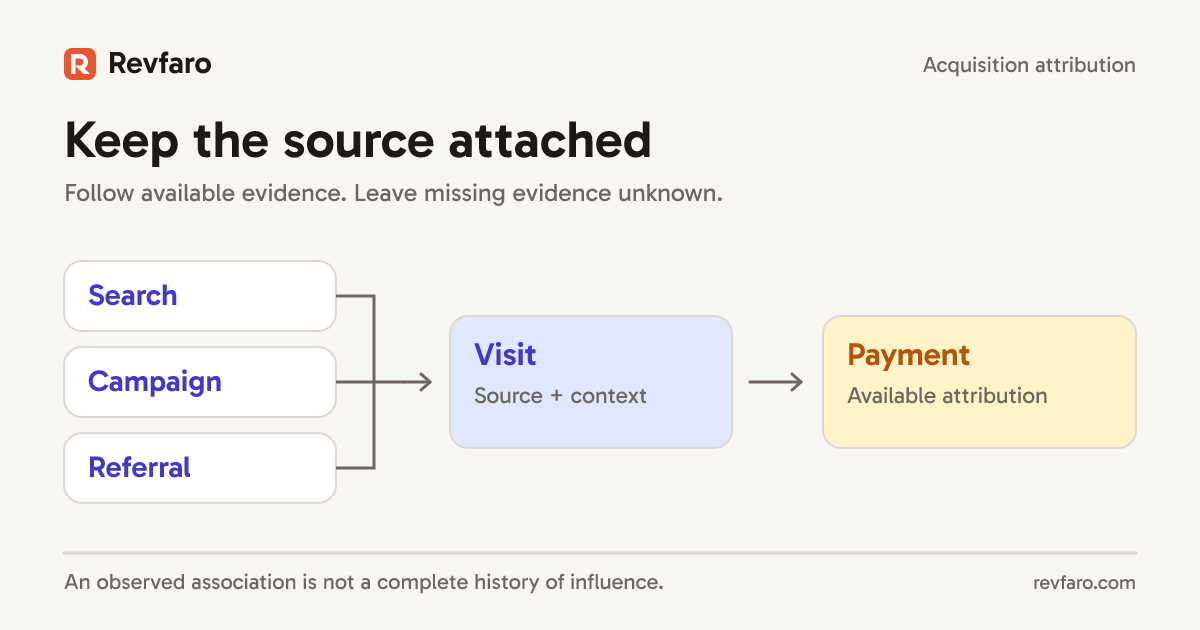
Tag controlled campaign links where appropriate, such as newsletters, creator campaigns and paid placements. Respect the destination platform's rules and keep authentication or sensitive links outside this campaign scheme. Preserve the original referring context through signup and external checkout when feasible and lawful.
Leave genuinely unknown traffic unknown. Forcing a source label from weak clues produces false precision.
Measure the business outcome
Compare direct sessions against signups, activation, and verified purchases. An increase in direct traffic with declining activation should lead to a source-quality investigation, not an automatic celebration.
Keep an uncertainty log for a direct spike
Suppose direct visits to an obscure guide rise the same afternoon as a community discussion. Record three separate facts: the guide received more visits, the discussion occurred, and the visits lacked a usable source. Those facts suggest a hypothesis; they do not establish that every visit came from that discussion.
Check the links you can reproduce. Did a redirect discard the query? Does opening the link in the relevant app preserve a referrer? Did the campaign use the same source spelling as the previous report? Record the result rather than relabeling historic visits from a guess.
Revfaro's campaign guide explains how source tags affect classification. A dashboard note can preserve the release or campaign context without changing the collected source data. If evidence remains missing, report direct or unknown activity with its limitation and continue evaluating the visitors' actual goals and purchases.
Related reading
- UTM Parameters Explained: A Clean Tracking System for SaaS
- Organic vs Paid Traffic: Which Produces Better SaaS Customers?
Frequently asked questions
Is direct traffic always someone typing a URL?
No. It is frequently a missing-attribution category that may include several types of visits.
Can I eliminate direct traffic with UTMs?
No. Tagging controlled campaigns reduces avoidable unknowns, but not every visit has a recoverable source.