
Quick answer
Measuring SEO outcomes requires two complementary views: search impressions and clicks from a search console, plus onsite signup, activation, and revenue events from analytics. Neither system alone tells the entire story.
Key takeaways
- Keep search visibility and onsite behavior in separate columns.
- Use one population for each conversion numerator and denominator.
- Investigate page intent before shifting content investment.
Separate search visibility from onsite behavior
Search Console shows search-facing performance such as queries, pages, impressions, and clicks under its definitions. Website analytics records visits and downstream actions under different privacy, session, and bot rules. The numbers will not match exactly.
Start by tagging each organic landing page with its content cluster and intent. Record which pages attract buyers, not only which rank for popular phrases.
Build the content-to-customer chain
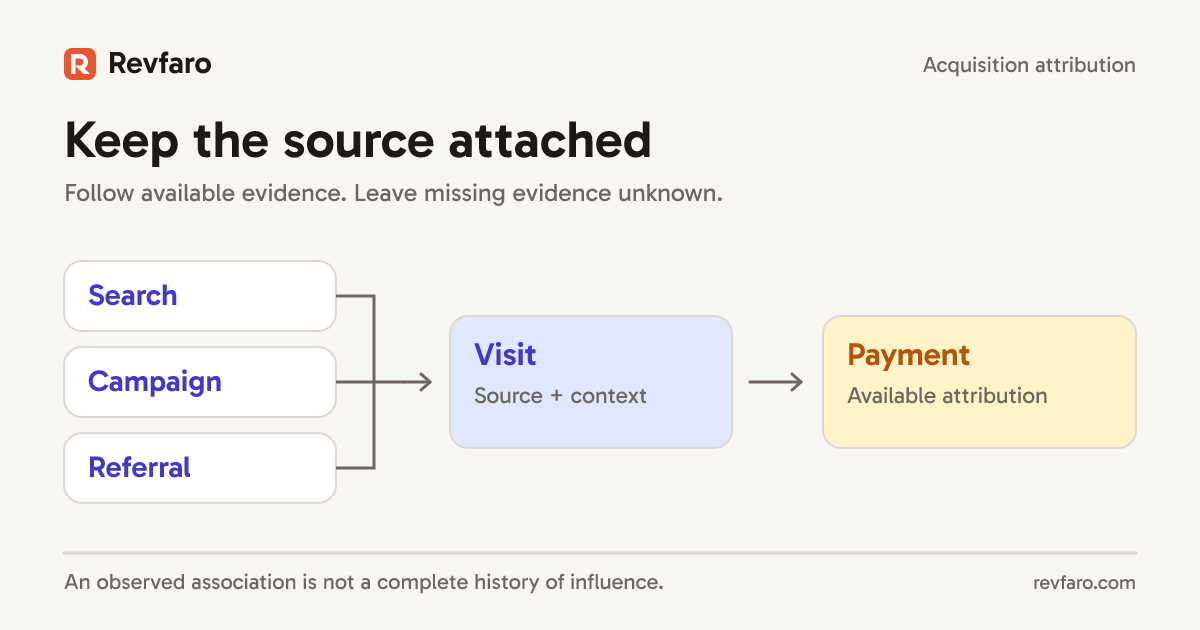
Use landing page, acquisition source, signup, activation, and payment confirmation as ordered evidence. A reader can return through a bookmark, email, or a different device, so your attribution model must state how credit is assigned and where it cannot be assigned.
Avoid interpreting the last page before purchase as the sole cause of the sale. Report first-touch or assisted influence separately if your stack captures it.
Example: choose the content winner
Article A brings 2,000 sessions and five trial activations; Article B brings 300 sessions and ten activations. B may deserve more internal links and an updated call to action even though A is the traffic winner. Verify cohorts and denominators before redirecting resources.
Use a content maintenance budget in ROI estimates. Articles can earn traffic for months but still require ongoing updates.
Improve reporting over time
Review by search intent, not individual keyword obsession. Track qualified conversions per landing-page session and identify content with impressions but low click-through, or visits but low activation. Each state suggests a different action.
Use a page-level evidence table
Build one row per landing page and comparable reporting window. Keep Search Console clicks in their own column, recorded website visits in another, then add successful goals and associated revenue. Do not divide a website goal count by Search Console impressions and label the result a visitor conversion rate. The populations and units differ.
For the hypothetical articles above, the activation rates are 5/2,000 = 0.25% and 10/300 ≈ 3.33% per recorded session. That comparison identifies a question about intent; it does not prove that rewriting Article A will produce Article B's result. Check the pages' acquisition mix and the definition of activation.
In Revfaro, inspect entry pages and apply relevant source filters using the dashboard controls. Add your own successful activation goal if that milestone matters. Keep query-level search evidence in Search Console; ordinary website referrers do not reveal every organic search query or establish which query caused a payment.
Related reading
- Referral Attribution for SaaS: Track Partners Without Guesswork
- Landing Page Attribution: Which Page Really Starts a Customer Journey?
- UTM Parameters Explained: A Clean Tracking System for SaaS
Frequently asked questions
Can Search Console show paid subscription revenue?
No. You need reliable onsite or billing data connected to acquisition context for that analysis.
Why are organic clicks and sessions different?
They use different definitions, processing methods, consent behavior, and reporting windows.