
Quick answer
Topic cluster analytics evaluates a connected group of pages serving one buyer problem rather than judging each post in isolation. Useful metrics include qualified discovery, deeper navigation, activation, and attributed customer value.
Key takeaways
- Give supporting articles distinct reader questions.
- Do not add overlapping unique counts as if they were disjoint.
- Document external cluster calculations separately from native reports.
Design clusters around real tasks
For a revenue-first analytics product, one cluster might explain attribution principles, payment webhook implementation, refunds, and cohort economics. Each article needs a distinct question and useful answer. A pillar page connects the concepts without duplicating every supporting article.
Assign a stable content-cluster label in your editorial inventory.
Measure the complete cluster
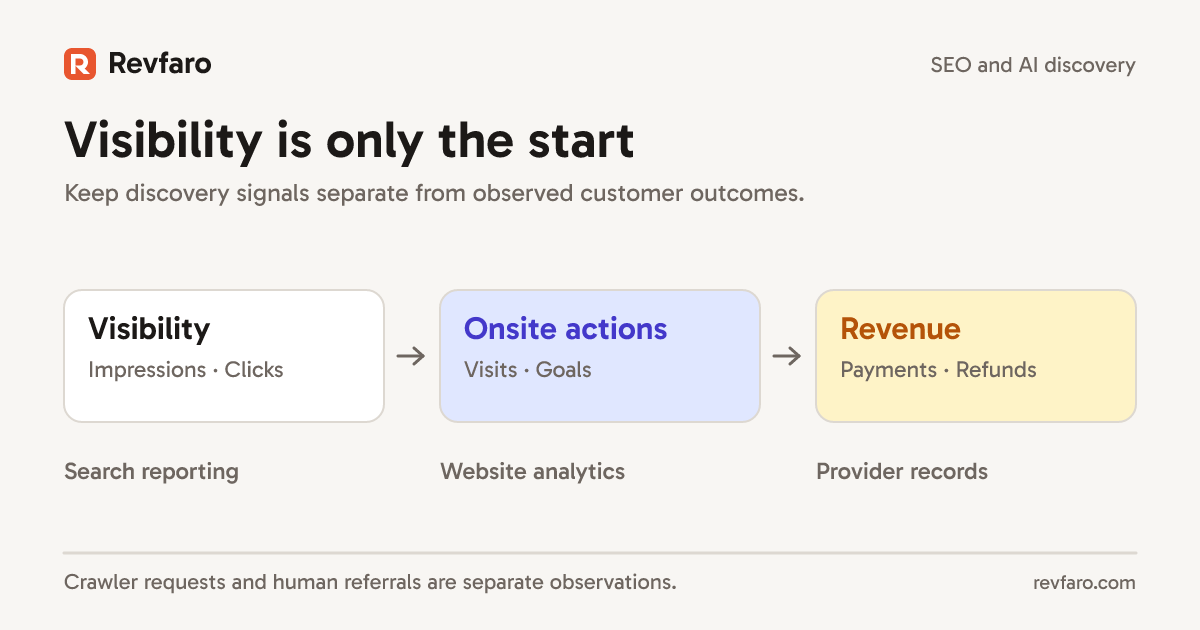
Aggregate relevant organic landing-page visits, conversion events, activations, and linked customer outcomes. Keep page-level diagnostics for titles, intent mismatch, and internal navigation. Report content effort and maintenance costs so a popular but expensive cluster is evaluated honestly.
Avoid double-counting one customer who read several articles as multiple acquired customers.
Compare a real decision
Suppose a fundamentals cluster brings large discovery traffic while an integration cluster brings fewer visitors but more paid trials. Fundamentals may still deserve investment as an entry point; the commercial cluster may need more focused updates.
Review first-touch and assisted paths when available, while keeping model limitations visible.
Maintain the content graph
Refresh outdated examples, consolidate overlapping pages, fix orphaned links, and update product screenshots after releases. A cluster should make a reader more capable, not force them through artificial SEO pages.
Give every page one inventory row
Create a cluster inventory with five columns: canonical URL, reader question, primary next step, measurement definition and maintenance owner. An attribution concept guide, a provider setup guide and a refund troubleshooting page should answer different questions even when they share vocabulary.
For a monthly review, collect the observed landing-page activity and relevant goal outcomes under the same date range. Keep the raw page figures available. Do not sum unique visitors from overlapping pages and call the result unique people across the cluster; one reader may appear in several rows.
Revfaro's dashboard provides page and source breakdowns, while goals describe deliberately instrumented actions. Cluster-level cost allocation, deduplicated cohort analysis and assisted credit are separate analytical work, not a promise of an automatic content-cluster report. Record the rules in the inventory so a content editor and a founder can reproduce the comparison next month.
Related reading
- Internal Link Analytics: Measure Whether Readers Find the Next Step
- Search Intent for SaaS Landing Pages: Match the Question to the CTA
- SEO ROI for SaaS: Measure Leads, Activation, and Revenue
Frequently asked questions
Is a topic cluster a ranking guarantee?
No. It is a useful content organization approach, not a guaranteed search result.
Can one customer be credited to multiple pages?
In assisted analysis yes, but total customer counts and revenue allocations must avoid unintended double counting.