
Quick answer
Internal link analytics shows whether readers find useful next steps on your site. Evaluate navigation by relevance and downstream outcomes, not by the largest number of recorded link clicks.
Key takeaways
- Judge an internal link by the reader task it supports.
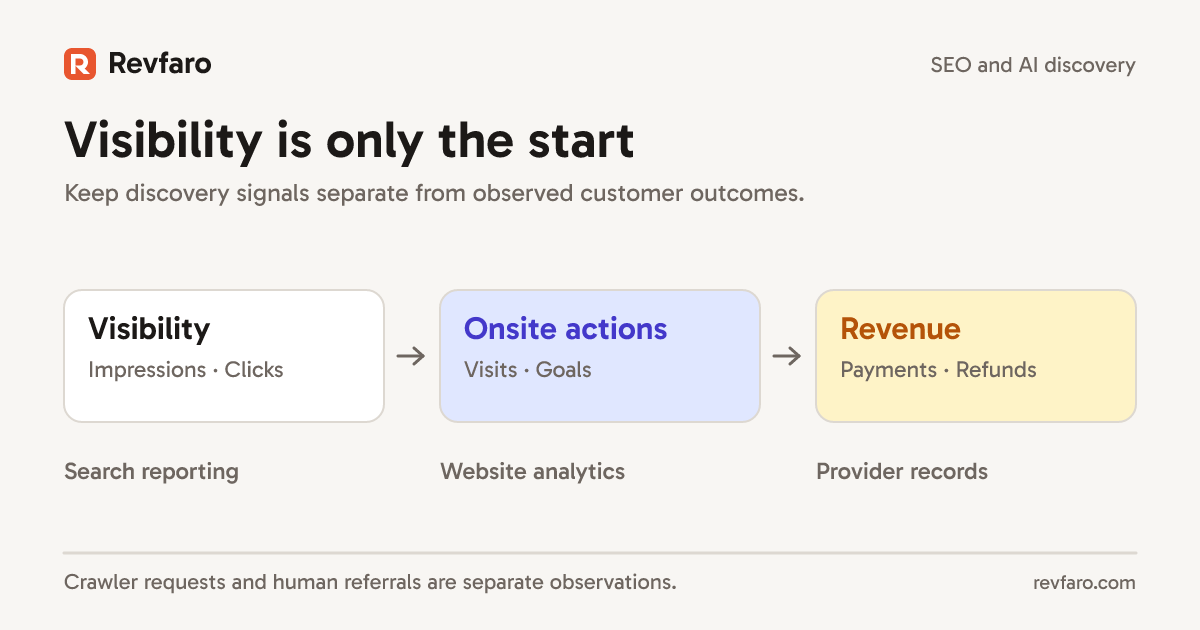
- Separate clicks from confirmed downstream success.
- Keep internal navigation out of acquisition campaign tagging.
Begin with reader intent
A definition article should link to a deeper example; an implementation guide should link to setup instructions; a comparison page can lead to product details. Links should help readers complete a task and form clear topical relationships.
Avoid placing dozens of repetitive links purely to manipulate search engines.
Record navigation without overtracking
Track page transitions and optionally internal CTA interactions when they answer a specific question. Distinguish links within content from header navigation if your experiment requires it. Normalize pages so query strings do not fragment totals.
Internal UTMs can overwrite original acquisition context, so do not use them casually to track onsite navigation.
Analyze a realistic example
Suppose many readers enter a revenue-attribution guide and follow a webhook tutorial, then complete setup. That pathway suggests the second guide serves a real learning need. If a prominent pricing link receives clicks but little trial activation, review the promise and landing-page fit.
Keep assisted conversions distinct from last-touch claims.
Improve the content graph
Link pillar articles to detailed supporting articles and back to the hub. Check for orphan pages, broken links, confusing anchor text, and links to unreleased content. Review the path after publishing each cluster.
Test one useful next step
Choose a single link from an installation article to its troubleshooting guide. Write the reader task first: someone who cannot see a test visit should find the verification steps. Keep the destination URL free of internal campaign tags.
Use a distinct click goal such as “open_install_help” only if the click itself answers a question. Then inspect whether people reach the destination and complete a separately defined setup success action. A click alone does not establish that the instructions solved the problem.
Revfaro's goals and journeys can support this investigation. A funnel can describe recorded steps in order when the plan includes funnels; it is not an automatic assisted-revenue model. Record the link position and wording when making a change so a later result can be interpreted. For broader content navigation, IndieTools explains internal links between products, benchmarks and guides.
Related reading
- Branded vs Non-Branded Organic Search for SaaS Growth
- Topic Cluster Analytics for SaaS Content Marketing
- SEO ROI for SaaS: Measure Leads, Activation, and Revenue
Frequently asked questions
Do more internal links always improve SEO?
No. Relevant navigation and useful content matter more than link quantity.
Should I put UTM tags on internal links?
Generally avoid using campaign attribution tags for ordinary internal navigation; they may contaminate source reporting.