
Quick answer
A visitor is a recognized browser or an estimate derived from the available identifiers; a session groups activity within a visit; a pageview records a page being viewed; and an event records a particular interaction. These metrics answer different questions and should not replace one another.
Key takeaways
- Visitors, sessions, pageviews and goals are different counting units.
- Name the conversion denominator and repeated-event rule.
- Collection mode changes what a cross-day visitor means.
Define the unit before calculating a rate
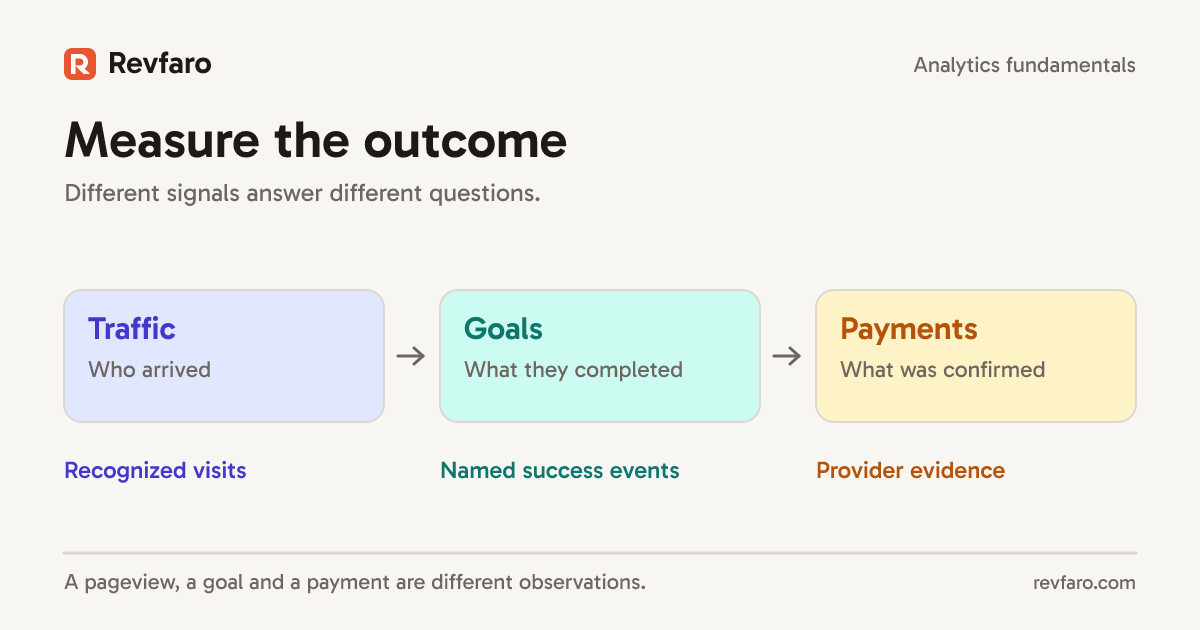
Pageviews show activity volume. Sessions show visit occasions. Visitors estimate reach. Events describe behaviors such as clicking pricing or finishing onboarding. Depending on the implementation, a person may have multiple anonymous identifiers, and session boundaries can vary between tools.
Sign-ups divided by visitors answers a different question from sign-ups divided by sessions. Neither is universally correct. The first approximates visitor conversion; the second measures conversion per visit and counts return visits.
Map common SaaS scenarios
One person arrives from search, opens the homepage, reads two articles, and leaves: one estimated visitor, one session, and three pageviews under a simple model. If they return tomorrow, the visitor count may remain one while the session count becomes two. A pricing-button event can occur several times without adding a visitor.
In a single-page application, navigation can change the URL without reloading the document. A tracker listening only for full reloads undercounts pageviews. Route tracking belongs in the measurement specification.
Calculate conversion correctly
Imagine 100 visitors, 150 sessions, 400 pageviews, and ten sign-ups in a week. Visitor sign-up rate is 10/100 = 10%; session sign-up rate is 10/150 = 6.7%. Reporting merely “conversion rate: 10%” hides the denominator.
Write each metric definition next to the KPI. Use consistent time zones, choose whether repeat conversions count, and compare tools only after aligning definitions.
Diagnose unexpected differences
Look first for duplicate tags, SPA route omissions, blocked JavaScript, privacy preferences, self-referrals, and inconsistent event deduplication. A gap between pageviews and events is not automatically a defect; actions only happen when users choose them.
Reconcile a tiny activity ledger
Here is an illustrative ledger, assuming the same browser identifier survives both visits.
| Visit | Recorded activity | Pageviews | Goal occurrences |
|---|---|---|---|
| Monday morning | Home, pricing, click trial twice | 2 | 2 |
| Tuesday afternoon | Documentation, successful signup | 1 | 1 |
That is one recognized visitor, two sessions under the assumed boundaries, three pageviews and three goal occurrences. It is not three customers. If the signup goal represents one completed account, the signup numerator is one; counting all goals would answer a different question.
Revfaro's Goals guide distinguishes occurrence counts from visitors who triggered a goal. Its cookieless mode also has different identity limits from stored browser identifiers. Write the collection mode next to a cross-day visitor comparison. Reset identifiers or a switch of devices can change the visitor count even when the same person performed every action.
Related reading
- Website Analytics for SaaS Founders: What to Measure First
- How to Choose a North Star Metric for an Early-Stage SaaS
Frequently asked questions
Can pageviews be greater than sessions?
Yes. One session can contain many pageviews. It may also contain just one if the visitor leaves after reading a single page.
Is a visitor always a unique human?
No. Browser resets, devices, blockers, shared computers, and consent decisions affect identity estimates.