
Quick answer
A landing page is where a session begins; an exit page is the last recorded page of that session. Both are useful, but an exit is not automatically a failure. Interpret the result against the visitor's task.
Key takeaways
- An exit is the last recorded page, not a stated reason for leaving.
- Define the expected next step for each page type.
- Validate external checkout transitions before calling them abandonment.
Read entry and exit as a journey
The same page can be an entry, middle step, or exit across different sessions. A blog post often attracts search entries. A checkout confirmation page should often appear at the end of a successful journey.
Group pages by intent before comparing them. Mixing documentation, pricing, application screens, and blog content in one exit-rate ranking creates misleading priorities.
Find exits that contradict expectation
Inspect transitions where a clear next action exists: pricing to checkout, signup to onboarding, or integration setup to first report. Segment by device, source, and new versus returning visitor. Check whether errors, slow loads, unclear copy, or required account creation correlate with exits.
An exit page cannot reveal why someone left. Pair it with completion events, error events, and usability feedback.
Example: the same exit rate, different meaning
An API documentation page might have an 80% exit rate because developers found the answer. A payment-information page with that number deserves investigation if buyers abandon before confirmation. The rate is identical; the business meaning differs.
Validate external checkout redirects so a successful off-site payment journey does not look like a failure.
Prioritize fixes rather than redesigning everything
Rank issues by eligible traffic volume, business impact, confidence in the data, and effort. Fix broken forms and navigation before rewriting pages that already satisfy intent. Repeat the same measurement after the change and annotate releases.
Make an exit investigation reproducible
Write down the expected next step for a page before calling its exits a leak. For an illustrative integration guide, success might be copying a configuration example and returning to an external development environment. For a signup form, success is a completed account. The same last recorded page can mean either a finished task or an interruption.
A compact investigation record should contain the entry page, source, device group, expected next action, observed goal count and a reproducible error if one exists. Review a small set of visitor journeys to form a hypothesis, then check the aggregate pattern with a funnel.
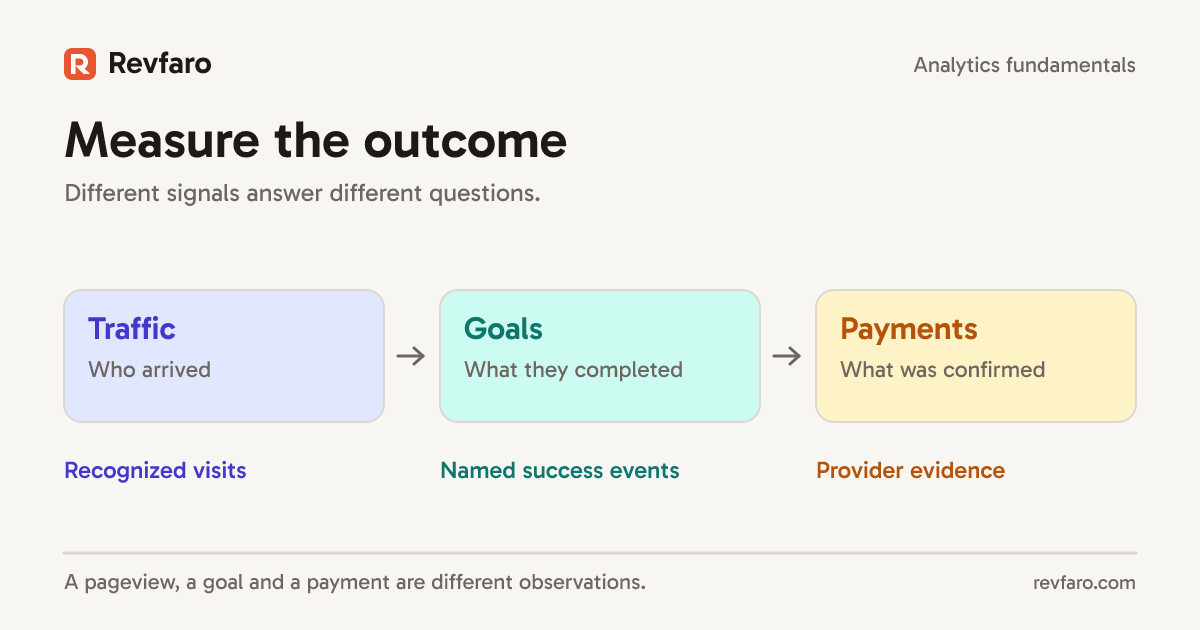
Do not infer a person's reason for leaving from their location or device alone. If the next step moves to a payment provider, verify the supported checkout handoff. A successful external payment and an abandoned form require different fixes, even when both appear to end on your website's pricing page.
Related reading
- Bounce Rate vs Engagement Rate: What SaaS Teams Should Use
- Visitor Journey Analytics: From First Click to Paid Customer
- Website Analytics for SaaS Founders: What to Measure First
Frequently asked questions
Is the exit page always the last page seen?
It is the last page recorded by the tracker in a session. Blocked scripts and external redirects can affect that record.
Is exit rate the same as bounce rate?
No. Bounce categorizes visits under a tool-specific rule; exits identify where recorded sessions ended.